
How Africa's "Unemployed" Youth Hold the Key to Its Greatest Leap
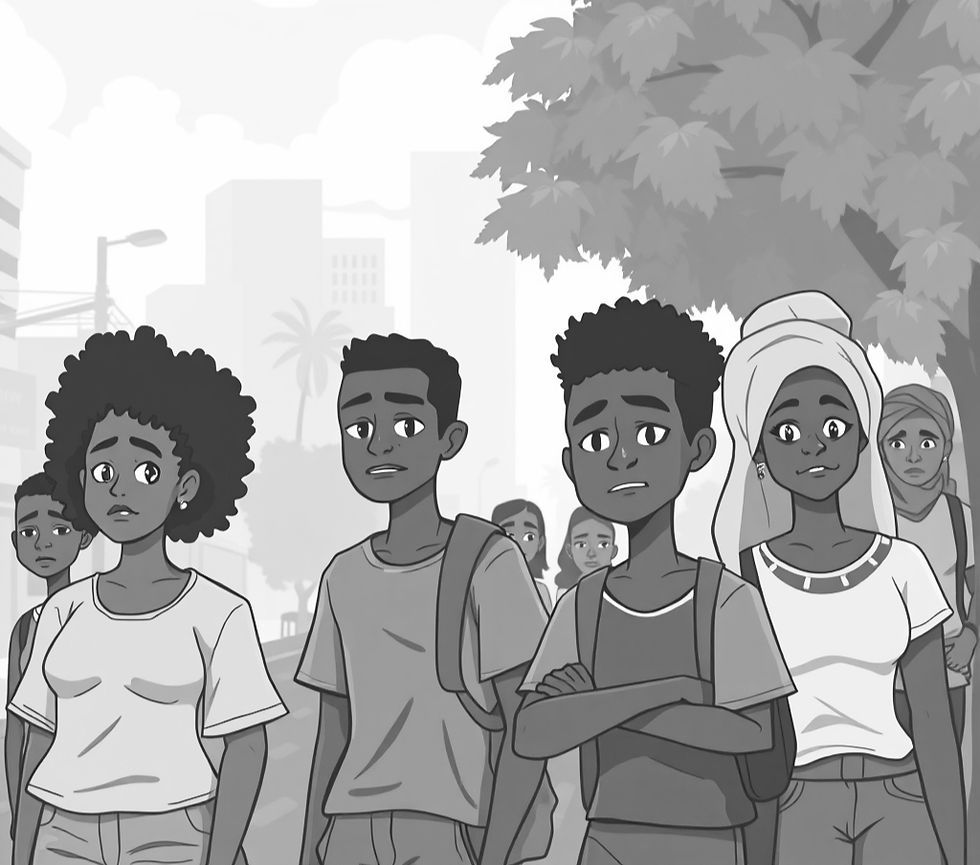
The narrative is familiar, and its statistics are seared into our collective consciousness: Africa’s youth unemployment crisis. The numbers are staggering, the headlines dire. It is framed as a ticking time bomb, a testament to failing systems, a continent-wide emergency. This perspective is not wrong, but it is catastrophically incomplete.
It focuses exclusively on a deficit—a lack of jobs—while standing blind to the continent’s most profound and potent asset: an unprecedented concentration of human energy, creativity, and latent potential. While European and Asian nations face the profound economic threat of aging populations, Africa possesses a demographic dividend that is the envy of the developed world. The challenge, then, is not a shortage of people, but a profound mismatch between the people we have and the systems designed to engage them.
We must confront an uncomfortable truth. A significant portion of these young people are not unemployed by accident; they have been systemically released. Released from an educational system that could not hold them—whether due to overcrowding, outdated pedagogy, or a rigid curriculum misaligned with their realities or aptitudes. They have been judged "incompatible" with a model that was never designed for them in the first place. Instead of seeing them as a failure of the system, what if we saw them as its most urgent critique and, potentially, its most dynamic resource?
The Flaw in the Foundation: Education Without Agency
The core problem lies in the design of traditional education itself. It is overwhelmingly an input-based system. It asks: What prescribed knowledge can we transmit? It values mastery of known answers over the cultivation of unknown questions. The result, as many employers lament, is a young graduate who may have a certificate but possesses little problem-solving agency—the ability to diagnose a messy, real-world challenge and iteratively build a viable solution.
This is not the fault of the youth; it is the logical outcome of a curriculum that teaches subjects, not skills; that values recall over resilience; that prepares students for exams, not for exigencies. We have a system that brilliantly produces scholars of problems but fails to produce architects of solutions.
The Radical Reframe: From Unemployed to "Pre-Employed" Problem-Solvers
This is where the paradigm must shatter. What if we stopped viewing these young people as a problem to be solved and started seeing them as the primary problem-solvers? What if their very disconnection from a flawed system is their qualification to build a better one?
The opportunity is to forge a new pathway: a personalised, problem-solving curriculum that operates in parallel to, and in critique of, the traditional academic track. This is not about adding another vocational course. It is about a fundamental reorientation of learning, built on two core principles:
The Curriculum as a Diagnostic and Prescriptive Tool: Learning begins not with a textbook chapter, but with a locally-identified problem. This could be agricultural post-harvest loss in a specific region, inefficient waste management in a peri-urban community, or a lack of digital access for local artisans. The curriculum is then reverse-engineered from this problem. What skills in data collection, agri-tech, logistics, circular design, or digital literacy are needed to understand and address it? The problem dictates the syllabus.
The Practitioner-Pedagogue as the Essential Guide: This curriculum cannot be delivered by academics detached from practice. It requires pedagogy-trained practitioners—the engineer, the agro-entrepreneur, the software developer, the community health organiser—who are actively engaged in their fields. They bring the real-world problem and the methodological toolkit into the learning space. They teach not just theory, but the gritty reality of implementation, stakeholder management, and iterative failure.
In this model, a cohort of youth is not "in school" in the traditional sense. They are an applied innovation lab. Their classroom is the community, their exam is the prototype, their graduation is the measurable impact.
How MORIM Facilitates the "Solution-Lab" Model
At MORIM, we believe this shift is not just pedagogical; it is civilisational. Our role is to build the bridges and furnish the tools to make this model operational and scalable.
The MORIM Heart & Presence Pedagogy™ for Practitioners: We equip the industry practitioners—the potential "guides"—with more than just their technical expertise. We train them in the relational and pedagogical craft essential for this work: how to create a psychologically safe "lab" environment where trial and error are celebrated, how to scaffold complex problem-solving for diverse learners, how to mentor agency rather than direct compliance. We convert experts into masterful facilitators of learning-in-action.
Curriculum Architecture for Real-World Problems: We partner with communities, local governments, and industries to identify high-impact, locally-owned challenges. Our framework then helps structure these challenges into a coherent, skill-based learning journey. We provide the methodology to embed the problem deeply into the curriculum, ensuring every module moves the cohort closer to a tangible, tested solution.
Cultivating the "Solution-Solver" Identity: The deepest outcome of this model is not a skill set, but an identity. Through our approach, participants shed the disempowering label of "unemployed" or "dropout." They become Solution-Solvers, Community Innovators, Agents of Local Development. This shift in self-perception is the ultimate catalyst for sustained action and entrepreneurship.
Building Ecosystems, Not Just Programs: MORIM connects these "solution-labs" to seed funding networks, local government planning units, and market access channels. We ensure the solutions have a pathway to sustainability, transforming a learning project into a viable social enterprise or a adopted public initiative.
Igniting the Latent Engine
Africa’s greatest challenge is not a lack of jobs. It is a surplus of untapped genius, waiting for a system worthy of its energy. The path forward is to stop trying to fit this vibrant, unconventional talent into an old and ill-fitting mold.
The future belongs to those who can build—build solutions, build enterprises, build resilience. By embracing a problem-solving curriculum led by practitioner-pedagogues, we can unlock the continent's latent engine: its youth. We can transform the "unemployed" from a statistic of despair into a distributed network of creators, actively building the future their communities need. This is not a dream; it is the most practical, urgent, and profound educational project of our time. The energy is already there, simmering. It is our responsibility to provide the structure for it to ignite.


